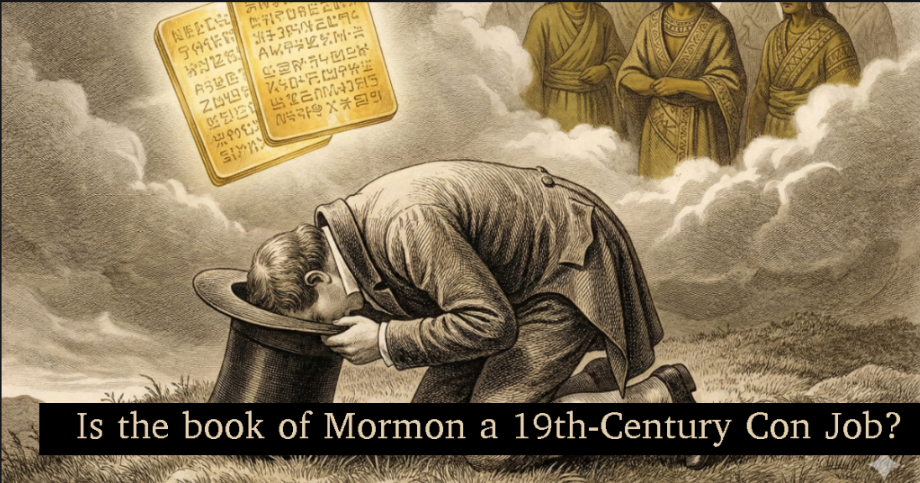
When the Book of Mormon first appeared in 1830, it was presented as an ancient record of Hebrew‑descended peoples who migrated to the Americas, bearing golden plates, Old‑World crops and animals, metal swords, coinage, chariots, and a fully literate civilization. Two centuries later, after thousands of excavations and breakthroughs in genetics, linguistics, botany, and archaeology, not a single shred of credible evidence supports those claims. Instead we find a striking pattern: every testable assertion made by the BoM fails under empirical scrutiny. What remains looks far more like 19th‑century fantasy than ancient history.
This article lays out a few of the major lines of evidence or lack thereof and argues that the most rational conclusion is that the Book of Mormon is not an ancient record but a 19th‑century composition, perhaps intentionally deceptive, perhaps a product of its time, but in any case not what it claims to be.
Horses, Hebrews, Resources, and Cities Not Found in the Early Americas
The Book of Mormon describes entire civilizations the Nephites, the Lamanites, the Jaredites complete with cities, fortifications, cities, wars involving tens or even hundreds of thousands, sophisticated agriculture, and metal industry. If any of that were true, archaeologists should have unearthed ruins, inscriptions, metal slag, tools, weapons, burial grounds, pottery, or even ancient coins. Instead, after nearly two centuries of exploration, no credible site matching any BoM city or people has been found.
The most straightforward explanation from scholars like the late professor of Mesoamerican archaeology Raymond T. Matheny is blunt: there is no evidence that the Book of Mormon civilization ever existed in the New World. Even supporters of the LDS tradition who attempt to reconcile the story with reality must resort to a “limited‑geography” model claiming the events were confined to a tiny, obscure region though that contradicts earlier teachings placing events across the hemisphere.
The anachronisms pile up fast. The Book of Mormon mentions horses, oxen, cattle, sheep, swine, and goats living and working in the Americas before the Spanish reintroduced such animals. It mentions wheat, barley, flax (linen), coinage, metal swords and breastplates, steel, chariots, “machinery,” and more. None of those have been documented in pre‑Columbian American archaeology at all.
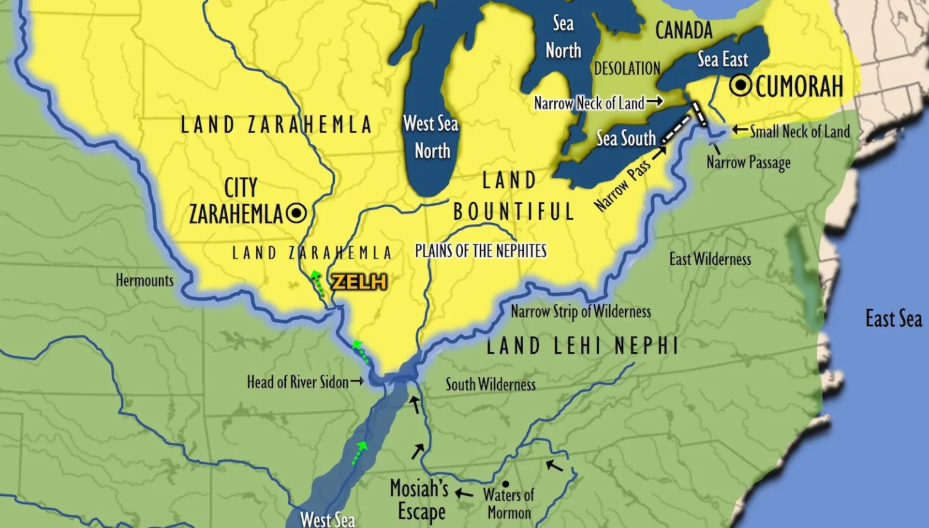
“Alleged Mormon map of ancient America, showing Zarahemla in ‘Nephite’ territory (yellow) supposedly separated from ‘Lamanite’ lands (green) by a river—locations with no verified archaeological or historical evidence. (credit: MoronisAmerica.com)
One of the few consistent statements from major scientific institutions, such as the Smithsonian Institution, is that they have never used the Book of Mormon as a scientific guide. In effect, mainstream archaeologists and anthropologists treat BoM-derived claims the same way they treat tall tales about lost cities and treasure maps as interesting folklore, not history.
If you believe tens of thousands died in an epic final battle and cities were leveled or abandoned, ask yourself: where are the swords, the ruins, the burial sites, the metallurgy‑waste, the coins, the pottery shards, the ancient metal plates?
Not one has stood up to scholarly review.
Genetics and Population Origins: What DNA Actually Says
One of the strongest contemporary blows to the Book of Mormon’s claims comes from population genetics. The BoM narrative long claimed that indigenous peoples of the Americas the so-called Lamanites descended from ancient Israelites who migrated from the Middle East around 600 BCE (with even older migrations before that). Genetic testing of Native American populations, however, consistently shows their ancestry traces back to ancient populations in Siberia and East Asia, migrating across the land bridge in Beringia during the last Ice Age.
DNA markers characteristic of Semitic or Near Eastern populations markers that should still be detectable even after mixing are virtually absent from Native American gene pools. No credible study has detected a “Hebrew signature” among native populations, despite decades of increasingly sensitive genetic methods.
Some defenders argue that if the migratory group was small, their genetic contribution might have been diluted beyond detectability. That’s not convincing. Even a small founding population would leave traces in the form of Y-chromosome or mitochondrial DNA lineages, especially if the population grew significantly, as the BoM claims. Instead, the genetic evidence overwhelmingly points to ancient Asian origins, not Middle Eastern ancestry.
In short: the DNA record conclusively contradicts the core claim that the peoples described in the BoM were Israelites who transplanted themselves to the Americas.
Hat Tricks and Holy Fraud: The Strange Translation of the Golden Plates
Imagine Joseph Smith in upstate New York, early 19th century, looking like a magician auditioning for a very specific talent show. Instead of reading the golden plates directly, he stuck his head in a hat with a small stone and claimed he could see the translation appear before his eyes. Meanwhile, scribes like Oliver Cowdery sat nearby, quills poised, feverishly copying every word Joseph muttered. It’s hard not to picture this as a cosmic comedy: a man mumbling in a hat, floating words appearing magically in a darkened cone, and assistants frantically trying to keep up. Modern historians might raise an eyebrow, but it’s precisely this unusual, almost slapstick method that made the story so memorable.
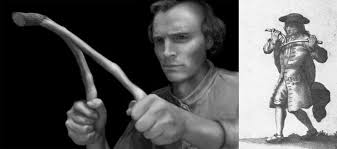
Long before golden plates and seer stones made him famous, Joseph Smith dabbled in the local occult economy with his trusty divining rod. In early 19th-century New York, treasure hunting was big business, and Joseph claimed his rod could locate buried treasure, lost mines, and hidden valuables. Locals reportedly paid him for these services, hoping he could magically pinpoint riches underground. Some historical accounts even suggest he used the rod to help investors and treasure seekers, taking fees or a share of potential finds. It’s a curious mix of folk magic and entrepreneurial spirit: a young man turning mystical claims into a side hustle, long before he transitioned from “treasure seeker” to religious prophet.
But this isn’t just folklore. Historical sources strongly support the hat-and-seer-stone method. Joseph himself described using the stone in a hat, and contemporaries such as Oliver Cowdery, Martin Harris, and even Lucy Mack Smith documented witnessing this process. Scholars including Fawn Brodie and Richard Bushman analyzed diaries, letters, and affidavits from the 1820s and 1830s, all confirming that Joseph dictated translations while never directly viewing the plates. The consistency of these firsthand accounts shows that, comical as it may seem, this unusual method of translation is historically attested and central to the story of the Book of Mormon’s creation.
Where Are the Golden Plates?
According to the Book of Mormon, its peoples recorded their history on metal plates using a “reformed Egyptian” script. Thus one should expect inscriptions, monuments, tablets, or other writing artifacts in that script somewhere in the Americas maybe buried, maybe on stone, maybe on metal. Instead: nothing. No example of “reformed Egyptian,” no inscriptions correlating with Book of Mormon names or places, no epigraphic evidence of Hebrew, Egyptian, or any Semitic-derived writing among Native American cultures.
Real pre‑Columbian New World writing systems such as Maya hieroglyphs have been studied and translated extensively. None mention Israelite migrations, Nephites, Jaredites, or familiar Book of Mormon events. None show linguistic or cultural continuity with Semitic languages. Those ancient American scripts do not resemble Hebrew, Egyptian, or any “reformed Egyptian.”
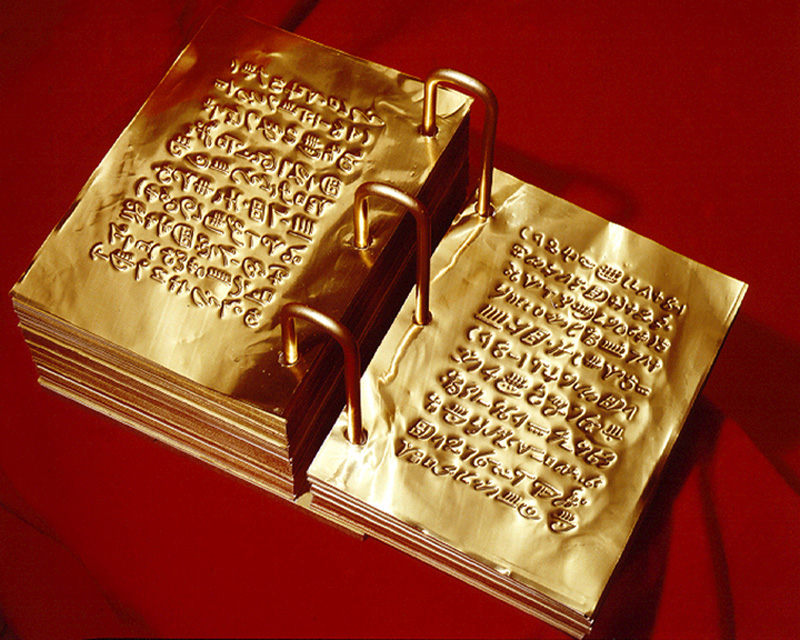
fabricated image of golden plates.
The silence of the record after centuries of excavation and scholarship is deafening. A people literate enough to track genealogies, chronicles, wars, land ownership, religious events, and kingship, and who allegedly lasted for centuries and fought massive wars, would likely leave some trace. Yet nothing credible has surfaced.
The Cumulative Case
When you assemble the findings from archaeology, genetics, botany/animal history, linguistics, and epigraphy, the result is a remarkably consistent verdict: the civilizations described in the Book of Mormon never existed. The described animals, plants, technologies, metallurgy, writing, coinage — none are supported by pre-Columbian evidence. The genetic roots of Native Americans do not point to the Middle East at relevant times. The bones, the tools, the writings, the ruins — all missing.
One respected assessment summarized the situation clearly: “nothing, absolutely nothing, has ever shown up in any New World excavation which would suggest … the Book of Mormon is a historical document relating to the history of early immigrants to our hemisphere.”
At this point, to insist on literal historicity is to demand that we ignore every major branch of modern evidence in favor of faith. That is not scholarship: that is special pleading.
What This Means for Faith and Claims of Historicity
If you believe the BoM is literally true, then you are asking to accept an enormous cluster of failed historical and scientific predictions. Either you ignore or reinterpret the mountains of contrary evidence or you accept that the BoM is not what it claims to be: a historical chronicle of ancient America.
Yes, you can treat it as a spiritual or moral allegory, but that undermines the claim made by its founder, Joseph Smith, that this was a real, ancient, historical account. Treating it as fiction or allegory is fine but you should be honest about it.
If we assess it as history, the most reasonable conclusion, based on all available data, is that the Book of Mormon is a 19th‑century composition whether a sincere attempt at revelation or a con job is another question, but calling it ancient history is indefensible.
References
Thomas W. Murphy, “Lamanite Genesis, Genealogy, and Genetics,” in American Apocrypha: Essays on the Book of Mormon, ed. Dan Vogel and Brent Lee Metcalfe. Salt Lake City: Signature Books, 2002.
Thomas W. Murphy, “Simply Implausible: DNA and a Mesoamerican Setting for the Book of Mormon,” Dialogue: A Journal of Mormon Thought, Vol. 36, No. 4 (Winter 2003), pp. 109–131.
Simon G. Southerton, Losing a Lost Tribe: Native Americans, DNA, and the Mormon Church. Salt Lake City: Signature Books, 2004.
David G. Stewart Jr., “DNA and the Book of Mormon,” FARMS Review 18:1 (2006), pp. 109–138.
Ugo A. Perego, “The Book of Mormon and the Origin of Native Americans from a Maternally Inherited DNA Standpoint,” in No Weapon Shall Prosper: New Light on Sensitive Issues, ed. Robert L. Millet. Provo, UT: Religious Studies Center, Brigham Young University, 2011, pp. 171–217.
Bill McKeever, “DNA Science Challenges LDS History,” Christian Research Journal 27, no. 1 (2004) / updated 2009.
Equip
Stan Larson, Quest for the Gold Plates: Thomas Stuart Ferguson’s Archaeological Search for the Book of Mormon. Salt Lake City: Freethinker Press / Smith Research Associates, 1996. (Discussed in Murphy’s critique.)
Dan Vogel & Brent Lee Metcalfe (eds.), American Apocrypha: Essays on the Book of Mormon. Salt Lake City: Signature Books, 2002. (Collection containing Murphy’s essay and other historical/critical discussions.)
Robert J. Matthews, “The New Publications of Standard Works — 1979, 1981,” BYU Studies 22, no. 4 (1982). (Relevant to discussions about changes in the published introduction to the Book of Mormon.)
John‑Charles Duffy, “Mapping Book of Mormon Historicity Debates: A Guide for the Overwhelmed — Part I,” Sunstone, no. 151 (Oct. 2008). (Survey of historicity debates, apologetic and critical.)
Michel‑Rolph Trouillot style — (for context only; not directly about Mormonism) Getting Genetic Ancestry Right for Science and Society, by Anna C. F. Lewis et al. — to illustrate modern standards for population genetics and ancestry studies. (arXiv preprint, 2021)
Scholarly article analyzing DNA evidence and Book of Mormon claims, highlighting inconsistencies with Native American ancestry.
https://www.dialoguejournal.com/wp-content/uploads/sbi/issues/V36N04.pdf
Critical review of archaeological evidence (or lack thereof) for Book of Mormon civilizations.
https://www.mormonstories.org/home/truth-claims/the-book-of-mormon/archaeology-and-the-book-of-mormon/
Detailed examination of anachronisms and archaeological challenges to Book of Mormon historicity.
https://mit.irr.org/book-of-mormon-archaeology-full
Letter from Smithsonian Institution clarifying that they have not supported Book of Mormon archaeology.
https://www.utlm.org/onlineresources/smithsonianletter2.htm
Analysis of genetic research showing Native Americans do not descend from ancient Israelites.
https://www.mormonstories.org/home/truth-claims/the-book-of-mormon/dna-and-the-book-of-mormon/
Peer-reviewed discussion of DNA evidence and its implications for the historicity of the Book of Mormon.
https://scripturecentral.org/archive/periodicals/journal-article/dna-and-book-mormon-0
BYU Religious Studies Center article analyzing mitochondrial DNA data in relation to Book of Mormon claims.
https://rsc.byu.edu/no-weapon-shall-prosper/book-mormon-origin-native-americans-maternally-inherited-dna-standpoint
Christian apologetics site summarizing DNA findings that challenge LDS historical claims.
https://www.equip.org/articles/dna-science-challenges-lds-history/
Critical essay reviewing Book of Mormon archaeology, history, and inconsistencies from a scholarly perspective.
https://www.nicenefoundation.org/a-critical-examination-of-the-book-of-mormon-a-christian-scholarly-review/
Overview of archaeological evidence and anachronisms in the Book of Mormon.
https://www.mormonhandbook.com/home/archaeology.html
Analysis of cultural and technological anachronisms in the Book of Mormon from a scholarly perspective.
https://rsc.byu.edu/reason-faith/anachronisms-book-mormon