
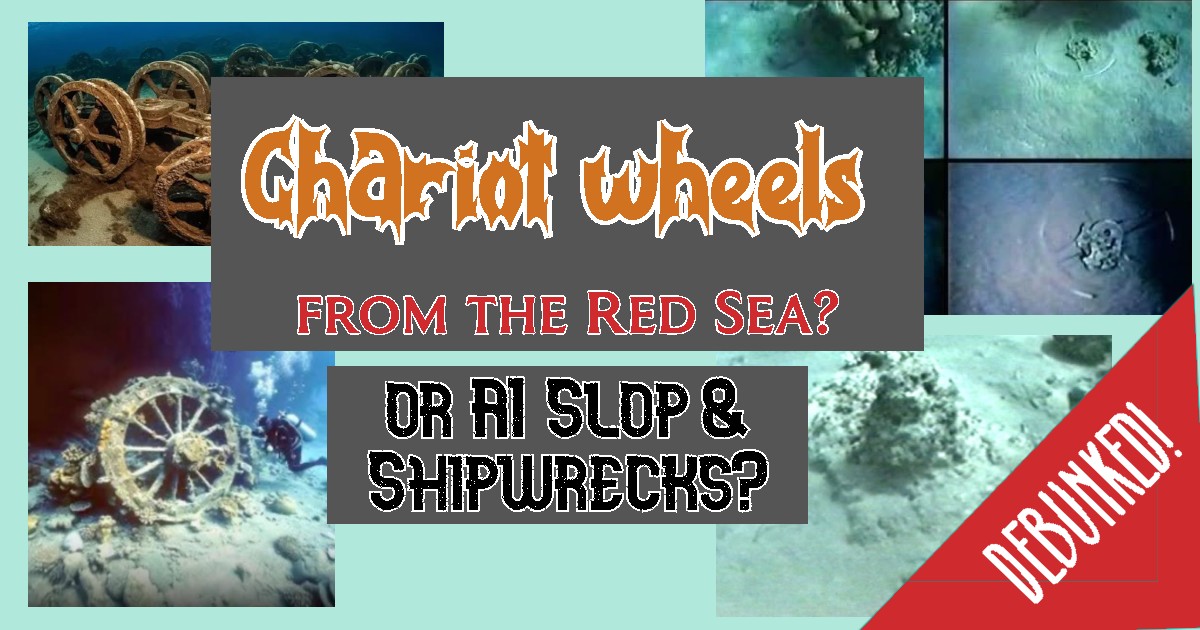
For decades, a persistent internet rumor claims that Egyptian chariot wheels supposed remnants of Pharaoh’s army drowned in Exodus 14 have been discovered at the bottom of the Red Sea. These stories circulate widely on YouTube, fringe archaeology websites, and now, increasingly, AI-generated fakes.
To be clear: no chariot wheels from the Egyptian army described in Exodus 14 have ever been found.
None. Zero. Not one authenticated artifact.
Yet the myth lives on, so let’s break down why this claim has no scientific credibility.
The Red Sea is Filled With Shipwreck Debris — Not Bronze-Age Chariots
Many photos circulated as “chariot parts” are actually pieces of old shipwrecks. The Red Sea has centuries of maritime history, and shipwrecks naturally scatter debris that can be mistaken by non-experts for something extraordinary.
A prime example is the 1887 Ulysses wreck, a well-documented British vessel resting in the Red Sea.
https://www.redsea-diving.com/the-ulysses/
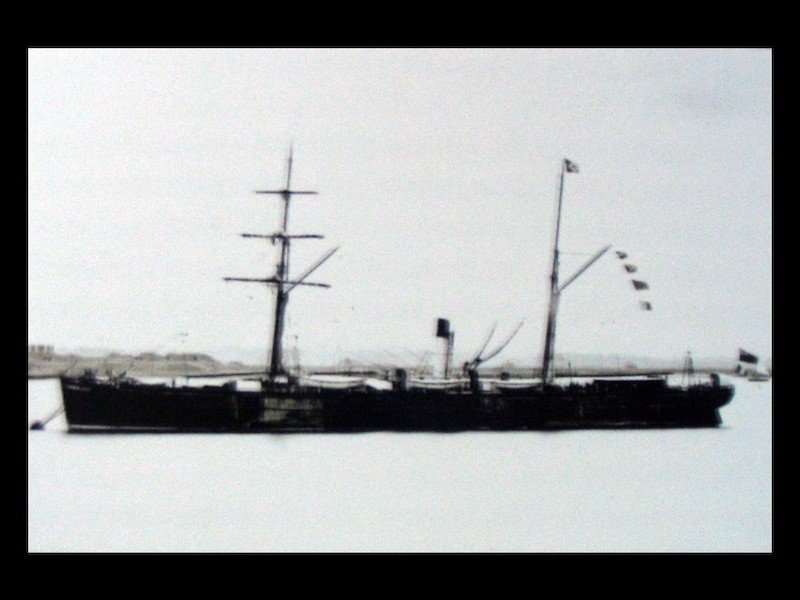
The wreckage showcases exactly the kinds of metallic structures people misinterpret:
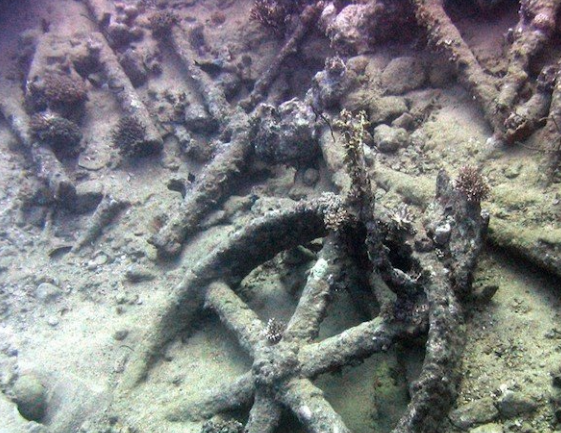
picture of Ulysses tiller wheel from 1887 wreckage
“The main structure is held together by iron cross members… even after more than 110 years underwater. The vessel is wide open… the diver is quite able to enter the vessel and explore both internal deck levels with plenty of natural light reaching almost every corner.”
— RedSea-Diving.com, Ulysses Wreck Overview
The Ulysses like many other wrecks contains many:
- Iron cross-members
- Cylindrical shapes
- Gear-like wheels
- Angular joints
- Encrusted metal fragments
These often become overgrown with coral, giving them rounded, wheel-like shapes. Divers unfamiliar with maritime archaeology sometimes mistake these encrusted shapes for ancient wheels—an error amplified by sensationalist websites.
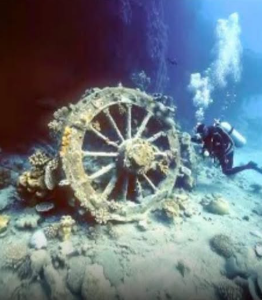
picture of a 19th century Steamship paddle wheel found in Red sea
Several 19th-century steamship wrecks are found in the Red Sea, with the most famous being the SS Carnatic and the SS Dunraven. The Carnatic, built in 1862, sank in 1869 after hitting the Abu Nuhas reef with a valuable cargo of gold and wine. The Dunraven, built in 1873, ran aground in 1876 while on a voyage from Liverpool to India
https://masterliveaboards.com/the-ss-carnatic-wreck-an-iconic-red-sea-dive/
Ron Wyatt’s “Discoveries” Are Widely Known Fakes
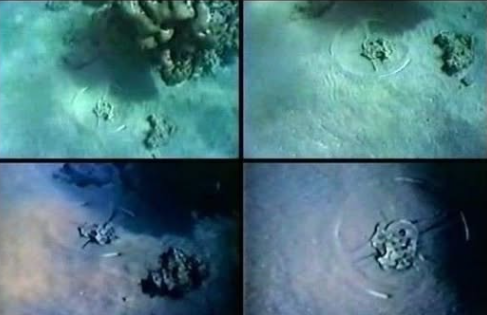
picture of bulkhead dogging wheel from wreckage
Much of the modern myth traces back to Ron Wyatt, a self-styled amateur explorer who claimed to find everything from Noah’s Ark to the Ark of the Covenant—without providing verifiable evidence for any of them.
Wyatt’s Red Sea “chariot wheels” are no exception.
According to the Bible Archaeology Report:
Wyatt’s so-called discoveries were actually coral formations and natural underwater shapes misinterpreted as artifacts.
— Fake News in Biblical Archaeology
Coral frequently forms perfectly circular or spoked patterns—visually convincing but entirely natural. Professional archaeologists who examined the photographs concluded:
- No identifiable artifact matched known Egyptian chariot construction
- No material was preserved that could be carbon-dated
- Most formations were clearly coral growths, not metal, wood, or composite pieces
- No structured site, debris field, or burial deposition resembling a battle or mass drowning exists
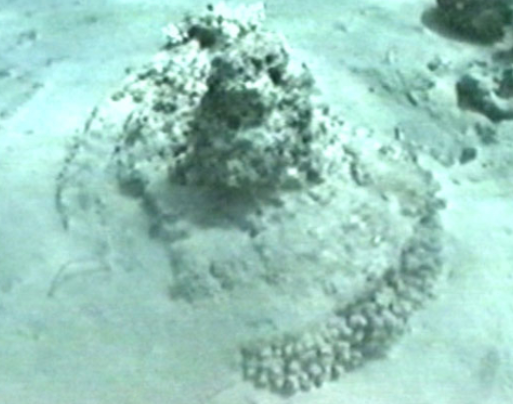
picture of structura corallium Maris Rubri (Red Sea coral structure
If a chariot army had actually been preserved under the sea, archaeologists would expect to find:
- Human remains
- Animal remains
- Weapons
- Chariot body fragments
- Horse fittings
- Cumulative debris concentrated in a single region
None of this appears in any documented survey.
Natural Coral Formations Frequently Resemble Artifacts
Coral can mimic almost anything:
- Wheels
- Axles
- Columns
- Boxes
- Tablets
- Human-like shapes
Coral grows symmetrically, attaches to any hard substrate, and builds geometric patterns that fool the untrained eye.
What looks like a bronze wheel rim is often:
- Coral covering a rock
- Coral covering modern trash
- Coral covering ship fragments
- Coral forming naturally in wheel-like radial patterns
Without:
- Provenance
- Material sampling
- Stratified context
- Expert verification
…a photograph of a coral circle tells us absolutely nothing.
AI-Generated Images Are Now Fueling the Myth
Over the last few years, new “chariot wheel discoveries” have emerged online—except they’re AI-generated fabrications. Typical giveaways include:
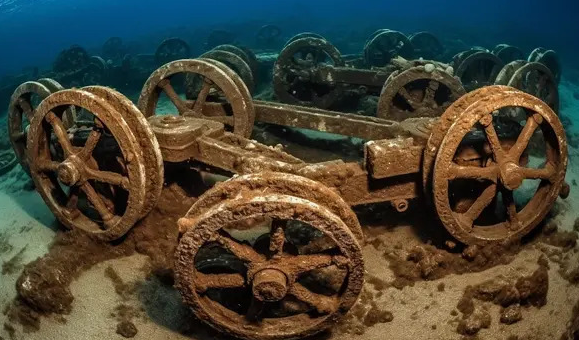
AI generated image
- Perfectly preserved wheels (impossible after millennia underwater)
- Symmetrical arrangements (nature and wreck debris aren’t that tidy)
- Unrealistic lighting
- Anachronistic artistic style
- Sandy seafloors with no coral growth whatsoever
Many of these images come from people prompting AI tools to create “Egyptian chariot wheel underwater” scenes, then presenting the results as real.

AI generated image
The combination of AI realism + preexisting myth makes the hoax more convincing than ever.
The Archaeological Reality
Serious underwater archaeology has been conducted in the Gulf of Aqaba, Gulf of Suez, and broader Red Sea region. These studies—conducted over decades—have found:
- Shipwrecks from the 19th century
- Medieval trade vessels
- Ottoman anchors
- Portuguese and Arab merchant ship remains
But no Egyptian military artifacts from the Late Bronze Age, the era of the Exodus.
Professional archaeology requires:
- Site mapping
- Peer-reviewed documentation
- Material analysis
- Repeatable verification
- Stratigraphic context
None of these exist for Wyatt’s claims or the online photos.
Conclusion
There is no archaeological evidence—none whatsoever—that chariot wheels from Pharaoh’s army have been found in the Red Sea. Coral formations, shipwreck debris like that of the Ulysses, misinterpretations by untrained divers, and now AI-fabricated images all contribute to the ongoing myth.
But fake archaeology harms public understanding, fuels conspiracy theories, and discredits legitimate biblical scholarship.
The myth of Red Sea chariot wheels is a textbook example of:
- Misidentified natural formations
- Misleading claims by untrained explorers
- Misused shipwreck debris
- AI-generated misinformation
- Sensationalism without evidence
References
Snopes — “Were Chariot Wheels Found at the Bottom of the Red Sea?” — this fact-check describes the claims and rates them “False,” explaining why the alleged discovery is not accepted. Snopes
Bible Archaeology Report — “Fake News In Biblical Archaeology” — this article explicitly lists “Egyptian Chariot Wheels in the Red Sea” among widely circulated but unsubstantiated claims, and critiques the lack of credible evidence behind them. biblicalthoughts.org+1
Associated Press / phys.org — “False story says archaeologists unearth Exodus evidence” — a 2018 piece reporting that alleged finds of chariots, bones, etc., were rooted in satirical or fake-news sites and had no corroboration from actual archaeologists or institutions. Phys.org
BiblicalThoughts.org — a critique entitled “Has Historical Evidence been Found …?” which argues there is no credible evidence for chariots, wheels, or skeletons in the Red Sea; and explains why organic materials such as wood, bone, etc., are extremely unlikely to survive intact for 3,500 years under those conditions. biblicalthoughts.org
Bible.ca (Exodus-Route / Nuweiba-site critique) — an article explaining why alleged coral-wheel photographs are misleading: coral formations change shape over time; no artifacts have ever been recovered; and the “evidence” collapses under scrutiny. Bible.ca+1