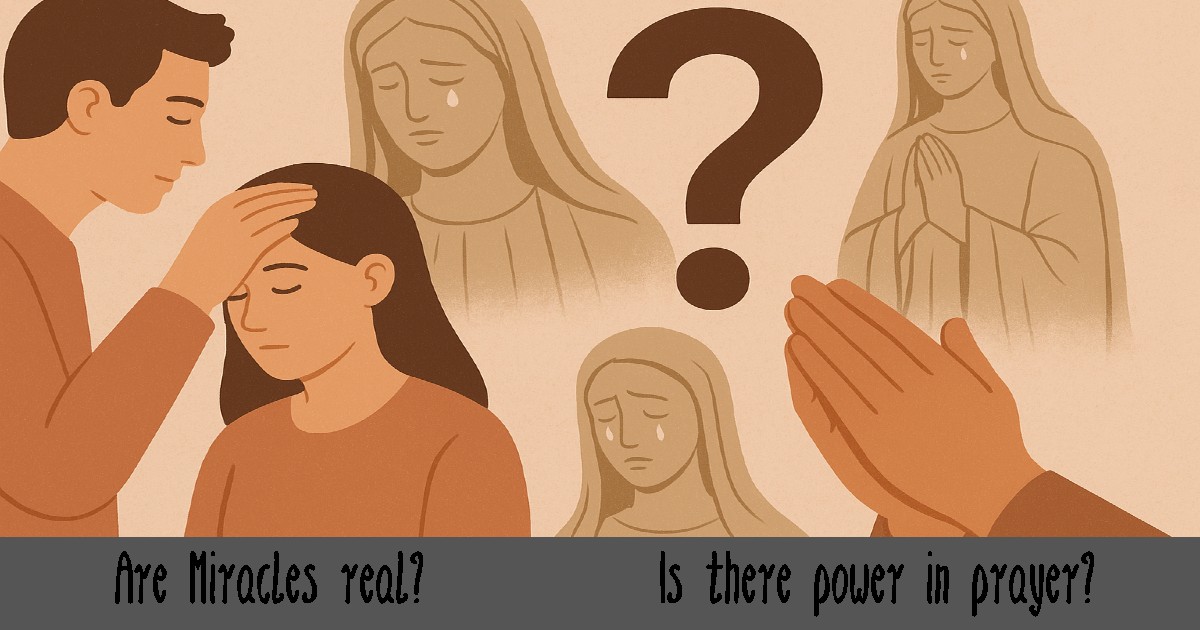
Miracles have been claimed for centuries. From sudden healings to “weeping” statues, believers have cited extraordinary events as evidence of divine intervention. When these claims are examined under rigorous scientific and forensic standards, the results are consistent. Miracles and the power of prayer do not exist. Investigations with adequate controls and legitimate sample sizes have repeatedly failed to show reproducible effects.
Intercessory Prayer and Faith Healing

Over the past few decades, intercessory prayer and faith healing have been tested in controlled clinical studies. Only studies with large enough sample sizes and proper methodology are considered reliable. A meta-analysis by Masters, Spielmans, and Goodson combined 14 studies including more than 3,700 participants. The overall effect of intercessory prayer on health outcomes was effectively zero.
One of the most notable studies on faith healing is the 2006 STEP Study, which involved over 1,800 patients undergoing heart bypass surgery. Researchers examined whether intercessory prayer could improve recovery outcomes. The results were striking: the study found no overall benefit from prayer. In fact, patients who were aware that they were being prayed for experienced more complications than those who were not, suggesting that the expectation of needing prayer may have increased stress or anxiety rather than providing any therapeutic advantage. This study remains a key reference in discussions about the measurable effects of faith-based interventions on physical health.
Notable faith healers & religious figures charged or convicted
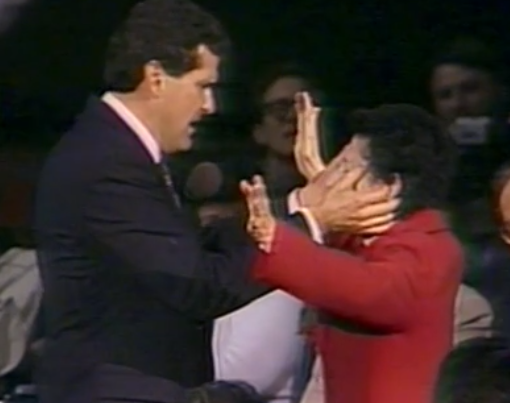
aith healers have frequently come under scrutiny for fraudulent practices, with numerous investigations revealing that some exploit vulnerable individuals seeking miraculous cures. In many cases, investigators have found staged healings, manipulated testimonials, and hidden medical treatments presented as divine intervention. Some well-known televangelists and traveling faith healers have been caught using sleight-of-hand tricks or preying on congregants’ desperation for profit, often soliciting large donations in exchange for “miracles.” Legal actions and media exposés have highlighted the potential for harm, as followers may forego legitimate medical care in favor of unproven spiritual remedies. These cases underscore the importance of skepticism and oversight when claims of supernatural healing are made
Faith healers and televangelists have occasionally been investigated and even criminally charged for fraud, often exploiting vulnerable individuals seeking miraculous cures.
A few notable cases include:
- Peter Popoff – Exposed for using hidden earpieces to feign divine knowledge of audience members’ ailments.
- Jim Bakker – Convicted of mail fraud, wire fraud, and conspiracy after misusing donations for personal gain.
- W. V. Grant – Convicted of tax evasion linked to income from his ministry; accused of staging healings.
- Jim Whittington – Convicted of conspiracy, mail fraud, and money laundering after defrauding a widow of nearly $1 million.
- J. Charles Jessup – Convicted of mail fraud related to his revival preaching and faith healing operations.
- Joe Alvarez – Arrested for grand theft and obtaining property by false pretenses, convincing women to pay for “spiritual cleansing.”
Investigations into Catholic Miracle Claims
Some of the most cited Catholic miracles have been carefully investigated and shown to be false, misleading, or explainable by natural phenomena.
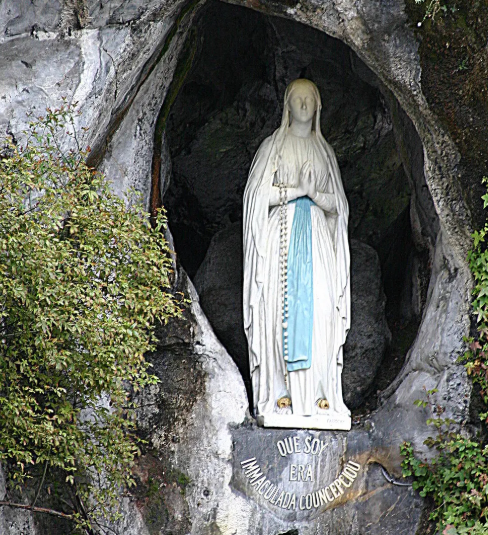
Weeping or bleeding statues are a frequent type of claim. Joe Nickell, in his book Looking for a Miracle: Weeping Icons, Relics, Stigmata, Visions and Healing Cures, documented numerous cases where alleged tears or blood were caused by condensation, oil, or outright fraud rather than supernatural phenomena. Investigations often revealed that alleged miracles occurred under circumstances that allowed tampering, and forensic analysis frequently identified ordinary substances rather than miraculous fluids.
The case of Pieter de Rudder, a nineteenth-century Belgian carpenter who reportedly experienced a miraculous healing of a broken leg, illustrates how historical miracle claims can collapse under scrutiny. Critical examination revealed inconsistencies in testimony and timelines, suggesting that the healing occurred before the pilgrimage that supposedly caused it. This undermines the narrative of an instantaneous miracle.
Alleged miraculous healings at Lourdes have also been questioned. Skeptical reviews indicate that many reported cures can be attributed to natural recovery, misdiagnosis, placebo effects, or statistical probability. There is no independently verified evidence showing that any healing at Lourdes is directly caused by supernatural intervention.
Claims of Eucharistic miracles have occasionally been presented with supposed scientific backing. In at least one case, documents claimed to be World Health Organization reports supporting a miracle were later exposed as fabricated or unrelated, further demonstrating the lack of credible evidence.
The Pattern of Failure
Both clinical investigations and historical examinations reveal a consistent pattern. Miracle claims, whether Catholic or otherwise, fail when subjected to rigorous analysis. Controlled studies of prayer and faith healing do not show measurable effects. Historical miracle claims, when critically evaluated, are often fraudulent, misleading, or explained by natural causes. The alleged evidence for supernatural intervention collapses under scrutiny.
Belief in miracles often relies on testimony and tradition rather than reproducible evidence. In science, extraordinary claims require extraordinary evidence. No miracle claim has ever met this standard in a reliable, independently verified manner.
Conclusion
Scientific investigation consistently demonstrates that miracles do not exist. Intercessory prayer and faith healing have no measurable effect on physical health. Historical Catholic miracle claims, including weeping statues, the healing of Pieter de Rudder, Lourdes cures, and alleged Eucharistic miracles, have been independently examined and shown to be false, misleading, or explainable by natural causes.
Miracles remain a feature of religious tradition and personal belief, but they do not withstand scientific scrutiny. The consistent failure of controlled studies and independent investigations indicates that claims of supernatural intervention are not supported by evidence.
References
- STEP — American College of Cardiology summary of the trial American College of Cardiology+1
- “Prayers Don’t Help Heart Surgery Patients; Some Fare Worse When Prayed For” — ScienceDaily report on the STEP findings ScienceDaily
- PubMed entry for the STEP study in cardiac bypass patients PubMed
- “No Prayer Prescription” – an article in Scientific American covering the STEP study and its conclusions Scientific American
- Full journal paper: “Study of the Therapeutic Effects of Intercessory Prayer (STEP) in cardiac bypass patients: a multicenter randomized trial …” in American Heart Journal (2006) ScienceDirect+1
- Joe Nickell. Looking for a Miracle: Weeping Icons, Relics, Stigmata, Visions and Healing Cures. Prometheus Books, 1993. Link
- Masters, K. S., Spielmans, G. I., & Goodson, J. Are there demonstrable effects of distant intercessory prayer? A meta-analytic review. Annals of Behavioral Medicine, 32(1), 21–26. Link
- Critical reviews of Lourdes healings and miracle claims: Fiveable Science & Sacred Studies
- Investigations into false Eucharistic miracle claims: Stream.org
- Jim Bakker — Televangelist indicted on 24 counts of fraud and conspiracy. The Washington Post
- Greater Ministries International (Gerald Payne & other leaders) — Church leaders convicted in one of the largest faith‑based Ponzi‑style fraud schemes. Christianity Today+2Christianity Today+2
- W. V. Grant — Convicted in 1996 of tax evasion linked to his faith‑healing ministry’s income. Wikipedia
- Jim Whittington — Convicted in 1992 on federal charges including conspiracy, mail fraud, and money laundering for defrauding a widow. Wikipedia
- Peter Popoff — Exposed in 1986 by independent investigation; then‑major media widely reported on how he used a hidden earpiece to fake “divine” knowledge. Los Angeles Times+1