The “Inverted Gospel”: The Hidden Speech from the Cross from:
The Fantastical and Heretical Acts of Peter
Long before the boundaries of the New Testament were firmly drawn, early Christians told stories about the apostles that went far beyond the familiar accounts. One of the most vivid examples is the Acts of Peter, a work composed around the middle of the second century, roughly seventy years after the Gospel of John. This text circulated among believers for generations, shaping how some communities imagined the authority and power of Peter the Apostle. It presents a world where miracles are not rare signs but constant demonstrations, where rivals clash in public displays of supernatural power, and where theological truth is proven through spectacle as much as through teaching. Later Christian leaders would come to label such writings as excessive or even heretical, yet for a time they were part of the living imagination of the early church.
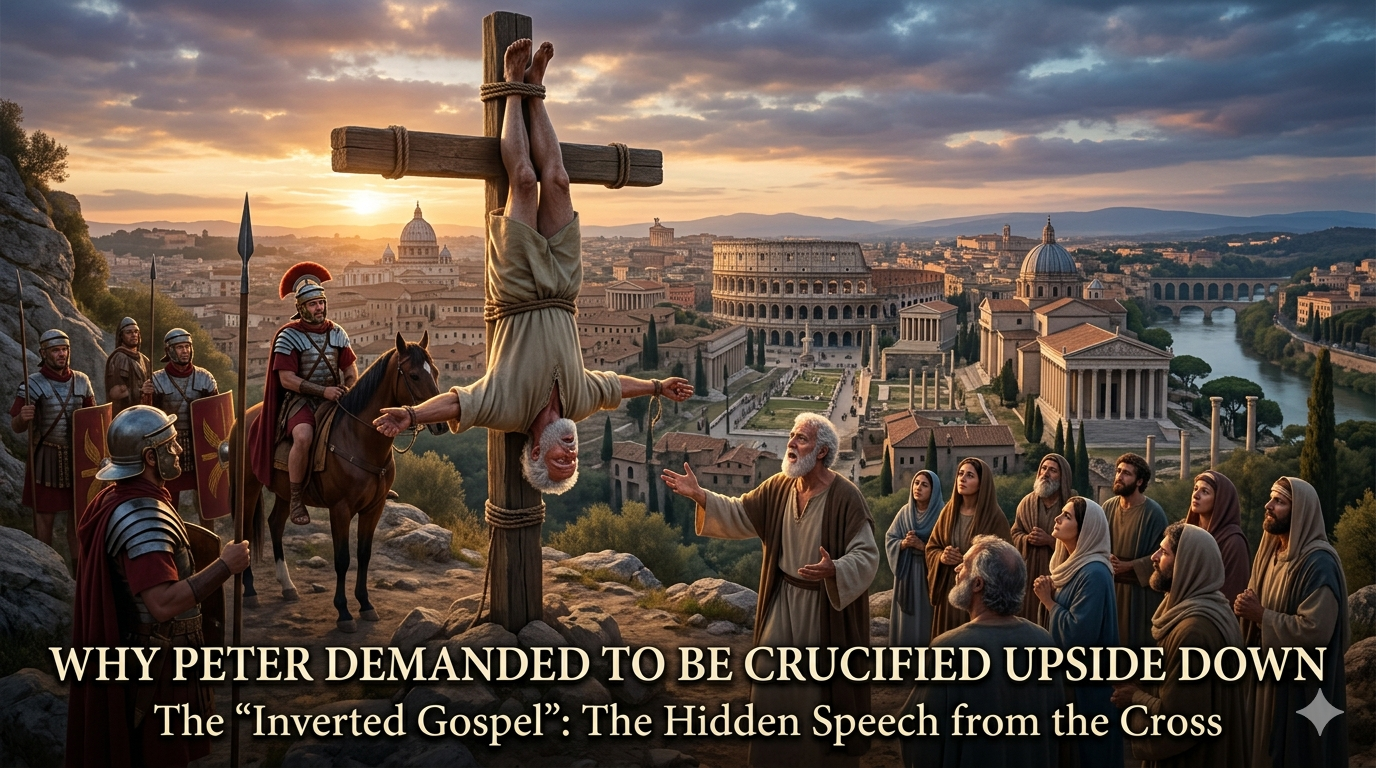
Why Peter Demanded to Be Crucified Upside Down
The Inverted Gospel: The Hidden Speech from the Cross
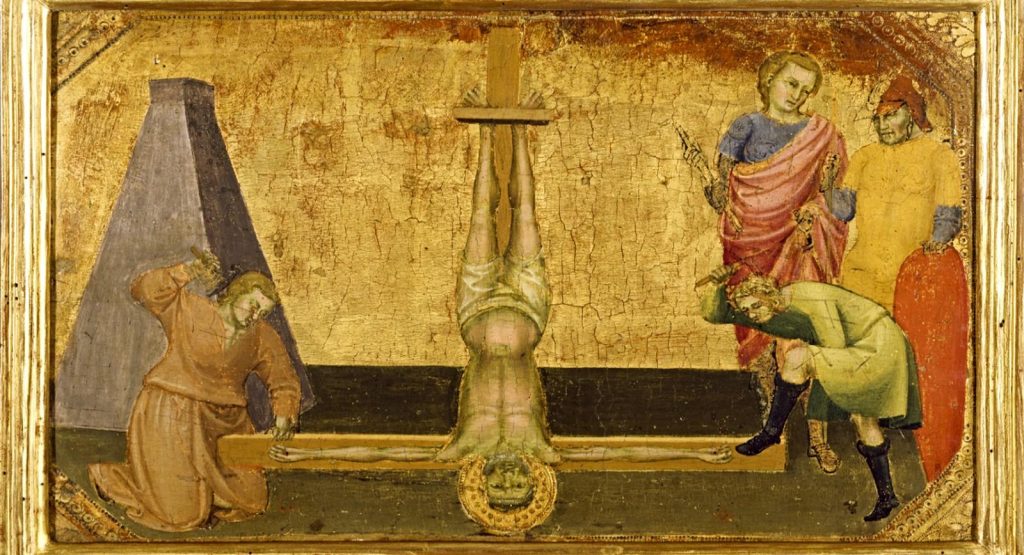
For centuries, early Christians told stories about Peter the Apostle that never made it into the Bible. Preserved in the Acts of Peter, written around 150 CE, these accounts reflect a world where belief was proven not just through teaching, but through spectacle.
What follows is not quiet theology. It is confrontation, performance, and escalating supernatural display.
The Talking Dog of Rome
Peter arrives in Rome to confront Simon Magus, but finds a large dog guarding the entrance to Simon’s house. Instead of driving it away, he speaks to it directly.
“In the name of Jesus Christ, speak and go in and say to Simon, ‘Peter, the servant of the Lord, calls you to come forth and answer for the deeds which you have done.’ And the dog, having received a human voice, went in and spoke these words to Simon, and coming out again, it declared all things before the people.”
Acts of Peter 9
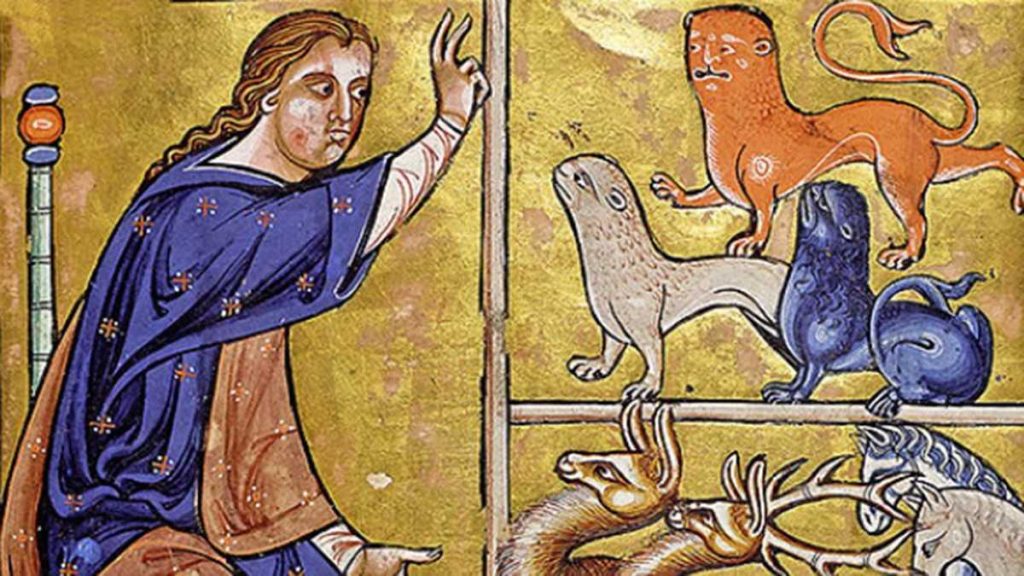
The text lingers on the moment. The dog is not just a courier. It becomes a public witness, repeating the message aloud to the crowd. The boundary between human and animal dissolves entirely, and the miracle is not hidden. It is staged in the open street.
Christianity vs Magic: The Supernatural Showdown
The conflict escalates into a public demonstration of power. Simon gathers followers and performs what appears to be an undeniable miracle.
“And behold, Simon was lifted up from the earth and began to fly in the air, and all the people looked upon him as he went up above them, and they were astonished, saying that this man is the power of God.”
Acts of Peter 32
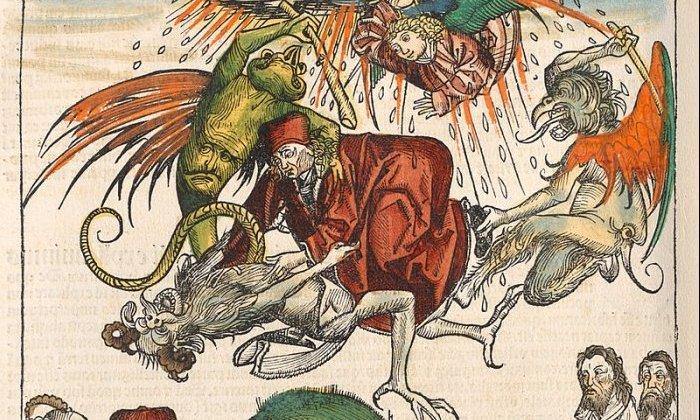
The crowd is convinced by what they can see. Simon’s power is visible, undeniable, and persuasive.
Peter responds not with spectacle, but with a direct appeal.
“And Peter, seeing this, cried out and said, ‘If I am a servant of the living God, let not this man prevail, but let him fall down and be shown to be powerless.’ And immediately he fell from the height and was broken.”
Acts of Peter 33
The miracle becomes a verdict. The fall is not just physical. It is symbolic. Authority is decided in front of everyone.
The Infant Who Spoke with Authority
The story then turns to something even more unsettling. Peter encounters a woman holding a nursing child and calls upon the infant to speak.
“And Peter said, ‘In the name of Jesus Christ, let this child speak.’ And immediately the infant spoke with a clear and manly voice, saying, ‘O you abomination, enemy of righteousness, deceiver of souls, your end has come, and you shall be made silent and depart from this city.’”
Acts of Peter 15
The text emphasizes the unnatural clarity of the voice. The child does not struggle or hesitate. It delivers judgment with certainty and authority, as though it were a fully grown witness. The miracle bypasses human development entirely, presenting divine truth as something that can emerge from anywhere, even from an infant.
The Resurrection of the Smoked Fish
In one of the most surreal moments, Peter turns to a demonstration meant to expose Simon’s power as illusion. He points to a dried fish, lifeless and preserved.
“And Peter said, ‘If you wish to know that I speak truth, bring me the fish that hangs there.’ And when they brought it, he said, ‘In the name of Jesus Christ, live and swim as you did before.’ And it was placed in water, and it lived and began to swim before them all.”
Acts of Peter 13
The miracle is deliberately extreme. This is not healing. This is reversal of death in its most final form. The crowd watches as something long dead moves again, reinforcing the claim that divine authority extends beyond natural limits.
The Upside Down Cross: The Inverted Gospel
The climax of the story arrives with Peter’s execution. When sentenced to crucifixion, he asks to be placed upside down, and while hanging inverted, he delivers a long and philosophical speech.
“You men who hear me, consider that the first man, whose race I bear, fell head downward and established this whole order of things, so that what was right became left, and what was above became below.”
Acts of Peter 37

He continues, explaining that the world itself has been reversed.
“And unless you turn and understand this inversion, you will not perceive the truth. For everything that you now see is contrary to what it ought to be.”
Acts of Peter 37
In this moment, the cross becomes more than an instrument of execution. It becomes a symbol of revelation. By hanging upside down, Peter claims to see reality as it truly is, correcting the distortion introduced by the fall of humanity.
Faith, Story, and Selection
The Acts of Peter is one of many early Christian writings produced by anonymous authors who expanded apostolic stories with dramatic miracles, bold speeches, and public showdowns. These accounts were not built on evidence in the modern sense, but on storytelling that conveyed meaning and authority through vivid narrative. In a culture where such writing was common, a story could be received as true because of what it communicated, not because it could be verified.
This approach to storytelling was widespread at the time, both before and after the Gospels. Traditions were retold, expanded, and reshaped to emphasize theological ideas, often without concern for strict historical detail. What mattered was the message and its power to persuade.
As these stories circulated, different versions competed for acceptance. Over time, church leaders such as Eusebius rejected works like the Acts of Peter, viewing them as too elaborate and fantastical to preserve as authoritative teaching. In forming the canon, they selected certain texts while leaving others behind.
What remains is a curated collection. What was left out, including works like the Acts of Peter, reveals how freely stories could be written, shared, and believed, reflecting a world where narrative itself carried the weight of truth.