A First-Century Divine Man, His Miracles, Philosophy, and Enduring Reputation

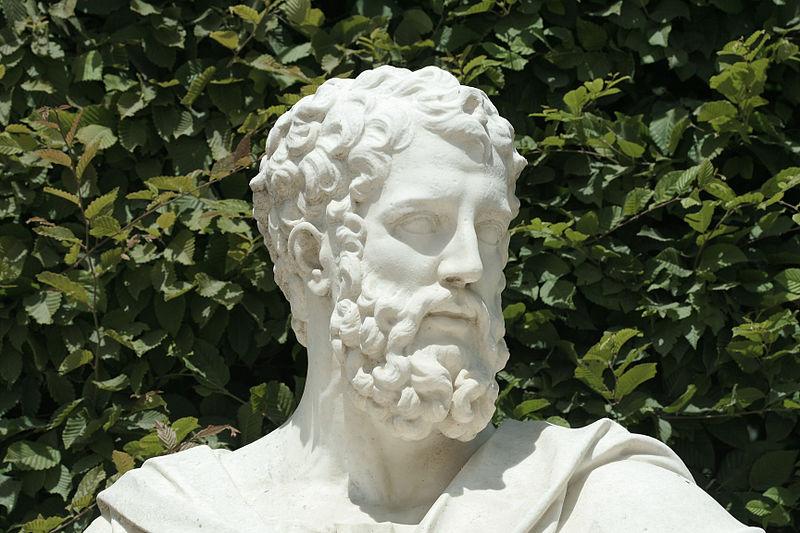
In the learned circles of the Greek East, there circulated the memory of a remarkable man: Apollonius of Tyana—a philosopher, ascetic, and wonder-worker, whose deeds were recounted with admiration and reverence. He is placed within the first century CE (c. 15–100 CE), a period fertile with teachers who combined wisdom with signs of divine favor.
Though preserved most fully in later narrative, Apollonius was remembered not merely as a thinker, but as one endowed with extraordinary power, whose life unfolded across cities, courts, and sacred spaces of the known world.
I. Origins and Philosophical Formation
Apollonius is said to have been born in Tyana of Cappadocia, a region where Greek learning met eastern religious sensibilities. From an early age he was devoted to philosophy, embracing the discipline of the Pythagorean way of life.
This philosophical identity shaped his public reputation:
- he adopted ascetic practices, abstaining from meat and luxury
- he practiced ritual purity and self-restraint
- he cultivated a life marked by silence, contemplation, and moral instruction
In this form he appeared not merely as a teacher, but as one who embodied wisdom made visible, a living example of philosophical virtue.
II. The Traveling Sage and Universal Teacher
Accounts preserved in Life of Apollonius of Tyana describe Apollonius as a traveler across the breadth of the ancient world.
He is said to have journeyed through:
- Asia Minor and Greece
- Egypt and Ethiopia
- Babylon and Persia
- India, where he conversed with sages and priests
These travels serve to present him as a universal philosopher, one who sought wisdom wherever it might be found and who instructed rulers and common people alike.
Wherever he went, he was received with a mixture of:
- curiosity
- admiration
- reverence
For he did not speak as an ordinary man, but as one whose authority seemed rooted in a higher order of knowledge.
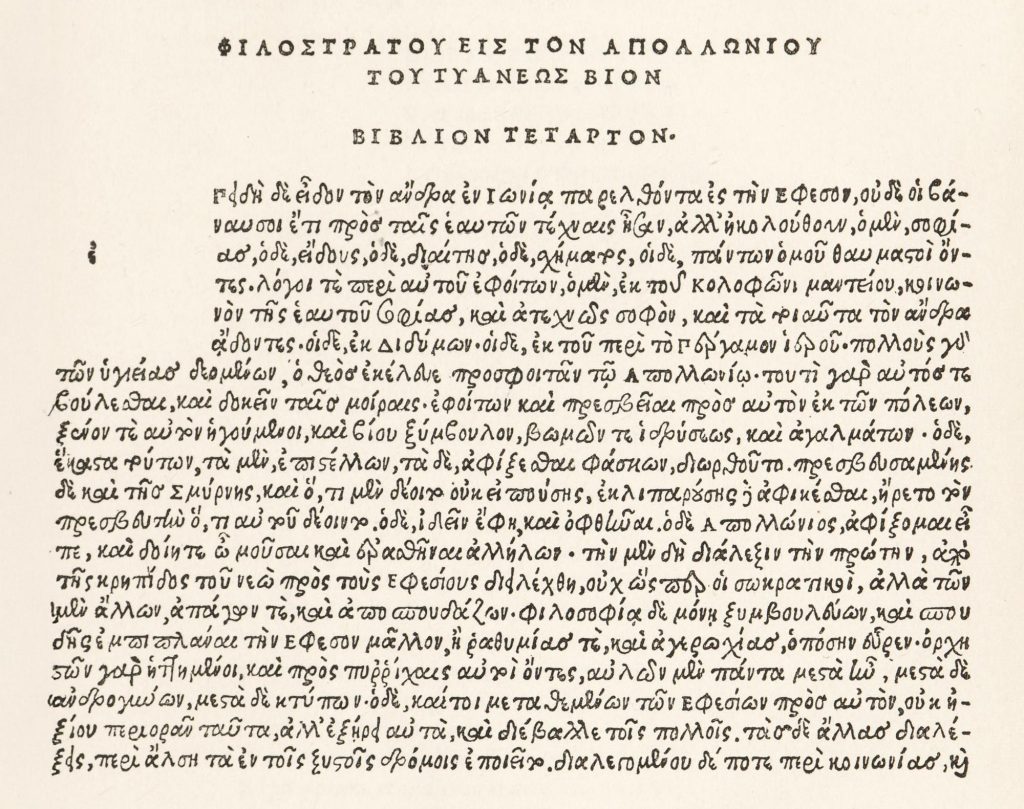
“Life of Apollonius of Tyana” by Philostratus
III. Miraculous Deeds and Signs of Divine Favor
Central to the memory of Apollonius are the miraculous acts attributed to him, which secured his reputation among the people.
Among the most frequently recounted are:
- healings of the sick, restoring health where physicians had failed
- expulsion of demons, freeing individuals from unseen afflictions
- raising of the dead, most notably the revival of a young woman thought lost
- foreknowledge of events, including distant happenings and future outcomes
- intervention in plagues, where his presence was believed to halt disease
Such accounts portray Apollonius not simply as a philosopher, but as one who operated at the boundary between human and divine.
The people, encountering such acts, regarded him as:
- a holy man
- a mediator of divine power
- one whose presence signaled the nearness of the divine realm
IV. Encounters with Power and Authority
Apollonius is depicted as engaging not only with the common people but also with rulers and emperors. He is said to have confronted authority with boldness, offering correction where he perceived injustice.
Particularly notable are his interactions with:
- Nero
- Domitian
In these narratives, Apollonius appears as a philosopher unafraid of power, whose allegiance lay not with empire but with truth and divine order.
One account tells of his trial under Domitian, where, after defending himself with remarkable eloquence, he is said to have vanished from the courtroom, an event reinforcing his reputation as more than mortal.
V. Philosophy Attributed to Apollonius
Beyond his deeds, Apollonius is remembered for teachings grounded in ethical rigor and spiritual insight.
Among the principles attributed to him:
- the soul is immortal and divine in origin
- the pursuit of truth requires self-discipline and purity
- wisdom is not merely learned but lived through action
- the divine is accessible through philosophical contemplation and moral life
He criticized:
- excess wealth
- moral corruption
- superficial religiosity
and instead called for a return to authentic virtue, aligning human life with the divine order.
VI. Death and Posthumous Presence
Accounts of Apollonius’ end are varied and imbued with mystery. Some traditions suggest:
- he disappeared rather than died
- he appeared to followers after death
- he ascended or was taken into the divine realm
These traditions reinforced the belief that Apollonius was not confined by ordinary human limits, but continued to exist in a transformed state.
VII. Reception and the Height of His Fame
Apollonius’ reputation, though established during his lifetime, reached its fullest expression after his death.
His fame peaks after his death, due to:
- the composition and wide circulation of Life of Apollonius of Tyana
- its presentation of him as a model philosopher and miracle worker
- its appeal to educated audiences across the Greek-speaking world
In subsequent generations, he was:
- revered as a divine man of wisdom
- invoked in discussions of miracles and philosophy
- compared with other figures known for extraordinary deeds
Even critics acknowledged the breadth of his reputation, engaging his memory in debates concerning the nature of divine power.
VIII. The Fading of His Influence
Despite his renown, the memory of Apollonius gradually receded.
This decline can be understood in light of:
- the absence of a structured community devoted to his teachings
- the lack of a developing canon or institutional tradition
- the shifting religious landscape of late antiquity
Over time, his figure remained preserved primarily in literary form, admired and discussed, yet no longer central to living religious practice.
Conclusion
Apollonius of Tyana, placed firmly within the first century CE (c. 15–100 CE), stands as a striking example of the ancient divine man, one whose life combined philosophy, asceticism, and miraculous reputation.
Revered by those who encountered his story, he was remembered as:
- a teacher of profound wisdom
- a worker of extraordinary deeds
- a figure who moved between the human and the divine
His life, as preserved in later narrative, reflects the enduring fascination of the ancient world with those who seemed to embody both knowledge and power, offering a glimpse into the ways authority, miracle, and philosophy were understood and celebrated across the Roman Empire.
Sources
Primary Texts
Ancient References
- Cassius Dio, Roman History
- Lucian
- Eusebius of Caesarea, Against Hierocles
Modern Scholarship
- Maria Dzielska, Apollonius of Tyana in Legend and History
- Christopher P. Jones, Philostratus: Life of Apollonius (Loeb Classical Library)
- Graham Anderson, Philostratus: Biography and Belles Lettres in the Third Century A.D.